


Dead Inventory = Dead Cash
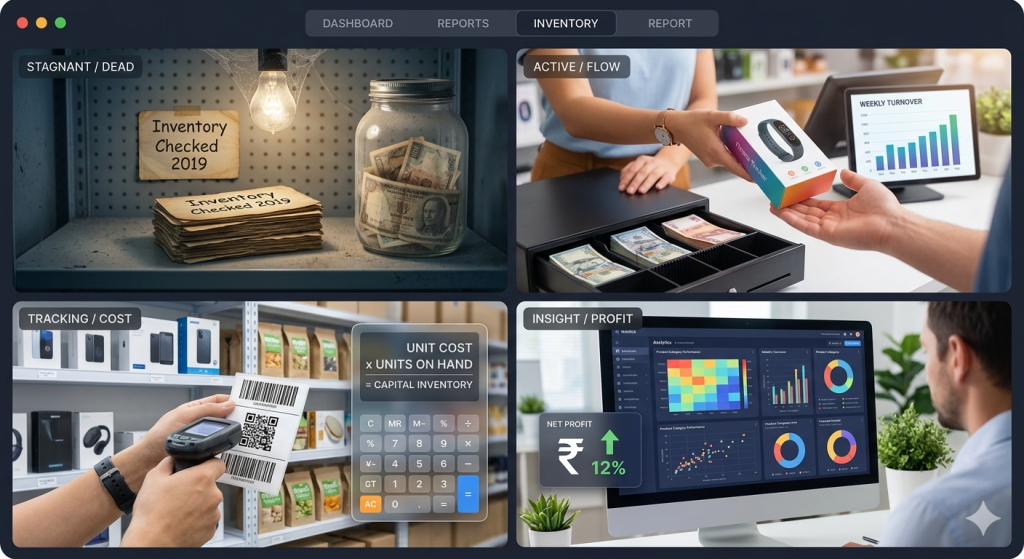
In retail, every product on your shelf represents money. But not all inventory works in your favor. When products stop moving, they stop generating revenue. Instead, they quietly begin to drain your business.
Dead inventory is not just unsold stock—it is cash that is stuck and unavailable. This is where many retailers unknowingly lose control of their finances.
The Real Problem Behind Dead Inventory
At first glance, excess stock may not seem like a serious issue. The shelves look full, and the store appears well-stocked. But behind the scenes, something more critical is happening.
That stock has already been paid for. The money used to purchase it is no longer liquid. It cannot be reinvested, it cannot be used for daily operations, and it cannot support business growth.
This is why dead inventory is often referred to as dead cash.
How Trapped Stock Affects Your Business
When inventory remains unsold for long periods, it starts affecting multiple areas of your business. The most immediate impact is on cash flow. Without steady movement of products, the flow of money slows down. This makes it harder to purchase fast-moving items or respond to changing customer demand.
Over time, retailers are forced to offer heavy discounts just to clear this stock. In many cases, products are sold at very low margins or even at a loss. What started as an investment slowly turns into a financial burden.
In supermarkets and grocery stores, the situation becomes even more serious. Products with expiry dates add another layer of risk. If they are not sold on time, they turn into complete losses.
Beyond financial impact, dead inventory also limits flexibility. When your capital is locked in unsold stock, you lose the ability to adapt. You cannot quickly introduce new products, take advantage of trends, or scale your operations efficiently.
Why Dead Inventory Happens
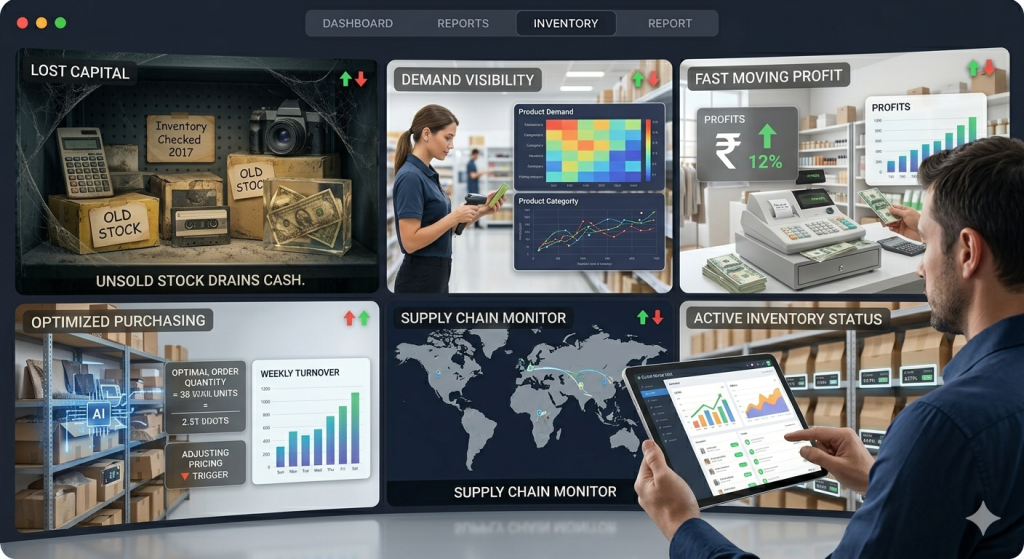
Dead inventory doesn’t happen overnight. It is usually the result of small gaps in planning and visibility.
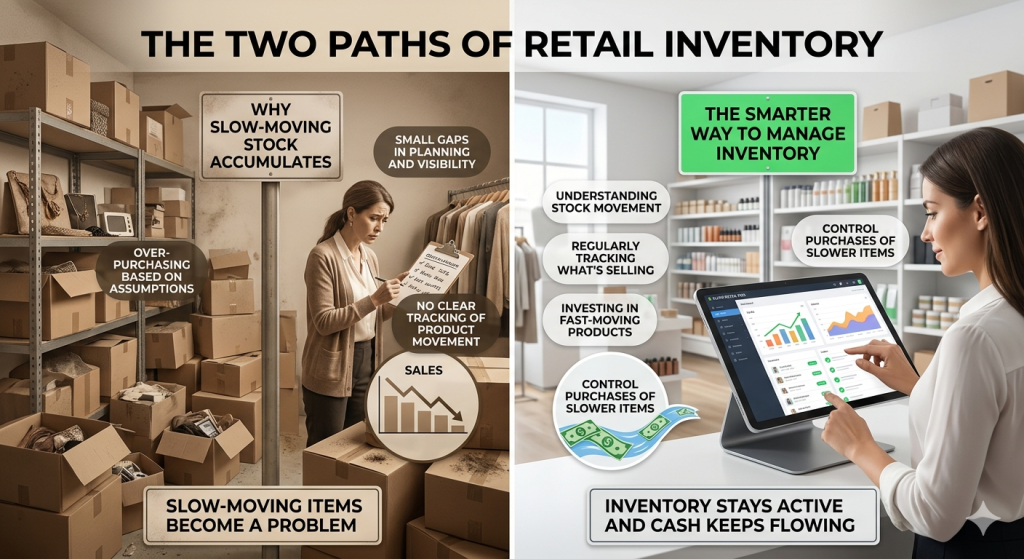
Sometimes it comes from over-purchasing based on assumptions rather than actual sales data. In other cases, it happens because there is no clear tracking of which products are moving and which are not.
Without proper monitoring, slow-moving items go unnoticed until they become a problem.
The Smarter Way to Manage Inventory
The key to avoiding dead inventory is not just reducing stock, but understanding stock movement.
Retailers who regularly track what is selling and what is not are able to make better decisions. They invest more in fast-moving products and control purchases of slower items.
With a system like ELIXIR RETAIL POS, store owners get clear visibility into stock movement, helping them identify slow-moving products early. Instead of reacting late, they can take timely action—whether it’s adjusting pricing, running offers, or optimizing purchasing decisions.
This kind of visibility ensures that inventory stays active and cash keeps flowing.
Conclusion
Dead inventory is one of the most overlooked problems in retail, yet it has a direct impact on profitability and growth.
Every product that sits unsold is money that cannot be used elsewhere. Over time, this limits your ability to operate efficiently and compete in the market.
With smarter tools like ELIXIR RETAIL, retailers can stay in control of their inventory and make informed decisions that keep their business moving forward.
Because in retail, movement is profit—and stagnation is loss.